

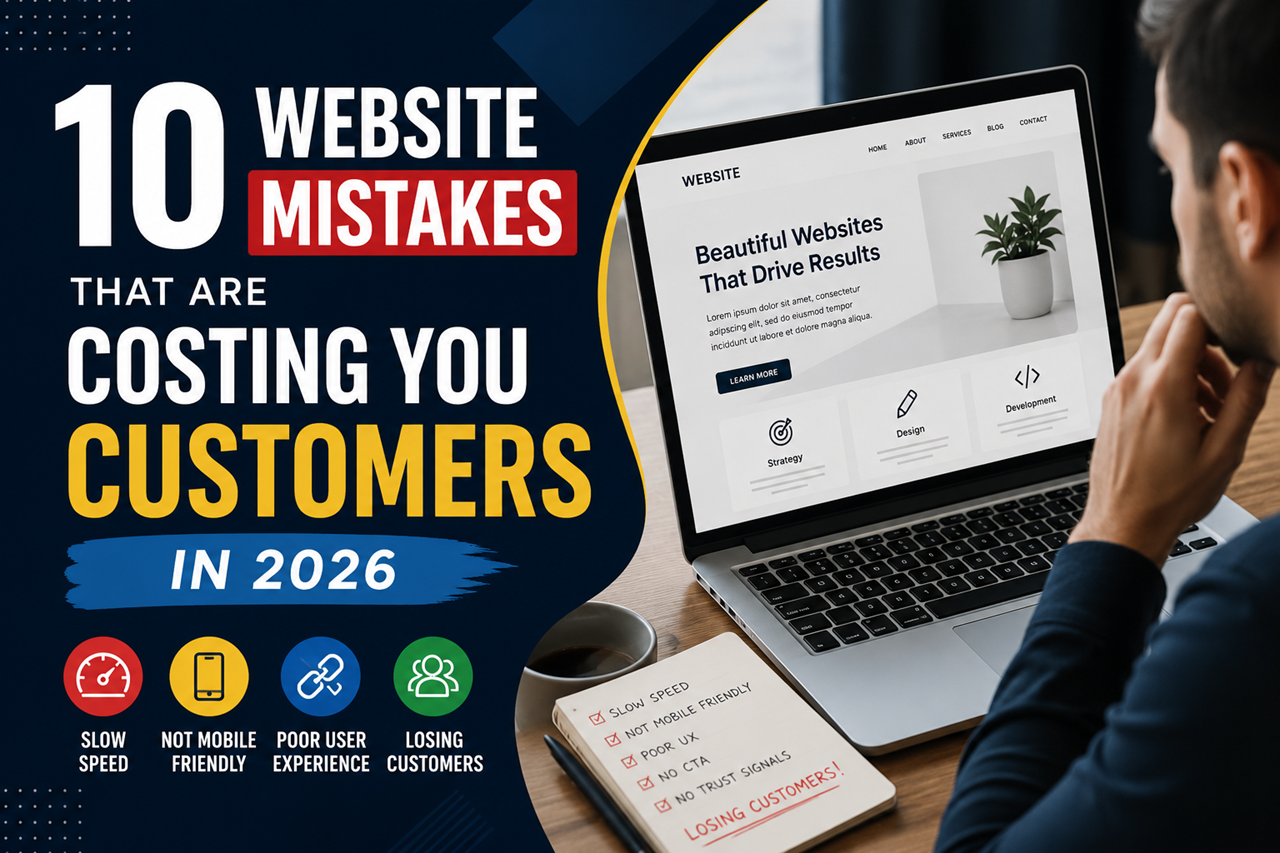
10 Website Mistakes That Are Costing You Customers in 2026
Your website is more than just an online presence—it’s often the first impression people have of your business.
Imagine visiting a website that takes forever to load, looks outdated, or makes it difficult to find contact information. Most people won’t wait. They’ll simply close the page and visit another business.
That’s exactly what can happen to your potential customers.
In 2026, customers expect websites to be fast, mobile-friendly, secure, and easy to use. If your website doesn’t meet these expectations, you could be losing valuable leads every single day without even realizing it.
The good news is that most website problems are easy to fix once you know what to look for.
In this guide, we’ll cover the ten most common website mistakes businesses make and show you how to avoid them.
1. Your Website Loads Too Slowly
Speed matters more than ever.
People expect websites to load almost instantly. If your pages take too long, visitors are likely to leave before they even see your products or services.
A slow website doesn’t just affect user experience—it can also reduce your search engine visibility and hurt your conversion rate.
Common Reasons for a Slow Website
- Large image files
- Low-quality web hosting
- Too many plugins
- Unoptimized code
- Too many third-party scripts
How to Improve Website Speed
- Compress images before uploading them.
- Remove unnecessary plugins and features.
- Choose reliable hosting.
- Enable browser caching.
- Keep your website updated.
Pro Tip: Test your website speed every month. Even small improvements can make a noticeable difference.
2. Your Website Isn’t Mobile-Friendly
Today, most website visitors use smartphones instead of desktop computers.
If your website doesn’t work well on mobile devices, you’re creating a frustrating experience for potential customers.
Common mobile issues include:
- Tiny text that’s hard to read
- Buttons that are difficult to tap
- Images that don’t fit the screen
- Slow loading on mobile networks
A responsive website automatically adjusts to different screen sizes, making it easier for visitors to browse your content.
Why Mobile Optimization Matters
A mobile-friendly website helps you:
- Improve user experience
- Increase engagement
- Build customer trust
- Reach more potential customers
3. Visitors Can’t Find What They’re Looking For
A beautiful website isn’t helpful if visitors get lost.
Simple navigation allows people to quickly find important information without confusion.
Your main menu should be clean and organized.
Consider including pages like:
- Home
- About Us
- Services
- Portfolio
- Blog
- Contact
Avoid adding too many menu items. A simple structure is easier for visitors to understand.
Ask Yourself
Can a first-time visitor find your services within a few seconds?
If the answer is no, your navigation may need improvement.
4. Your Website Doesn’t Build Trust
People buy from businesses they trust.
If your website doesn’t look professional or provide enough information about your company, visitors may hesitate to contact you.
Trust can be built by adding:
- Customer testimonials
- Project portfolio
- Client logos
- Business certifications
- Secure HTTPS connection
- Professional team photos
- Clear company information
Even small trust signals can make a big difference in converting visitors into customers.
5. Your Call-to-Action Is Weak or Missing
Many websites explain their services well but forget to tell visitors what to do next.
After reading your content, visitors should know exactly what action to take.
Strong calls-to-action include:
- Get a Free Quote
- Book a Free Consultation
- Contact Our Team
- Schedule a Demo
- Start Your Project Today
Your CTA should be visible, easy to understand, and placed throughout the website—not just on the Contact page.
Quick Tip
Every important page should answer one simple question:
“What should the visitor do next?”
If the answer isn’t obvious, it’s time to improve your calls-to-action.